Manufacturing has an image problem. Many people still picture dark satanic mills, while actual production lines are increasingly digital, precise and collaborative. Video is one of the fastest ways to close that gap.
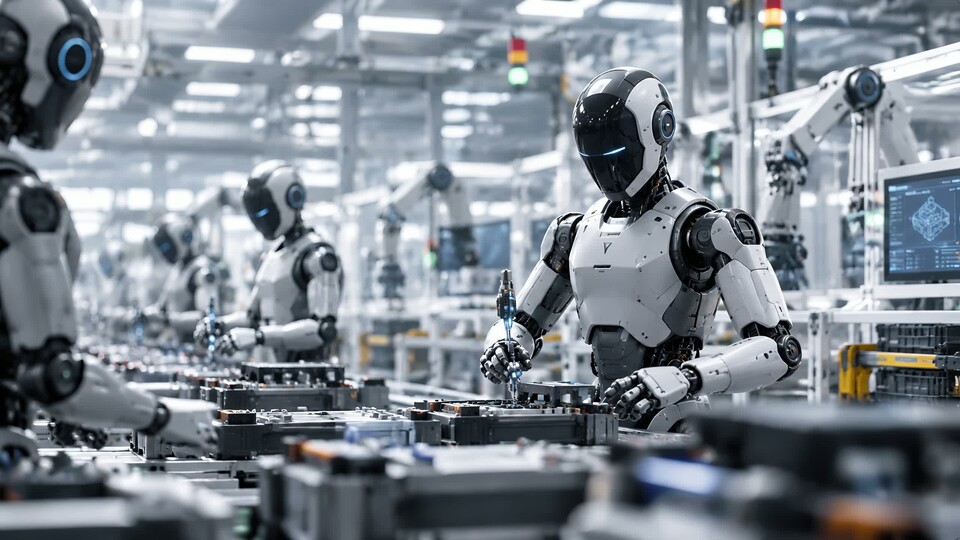
The humanoid robots on an assembly line are a vivid symbol of Industry 4.0. They are also a conversation starter: what is automated, what is augmented and what still depends on human judgement. A good video answers those questions instead of avoiding them.
Show the process, not just the product
Customers want to know how something is made, how it is checked and how it will arrive. A factory tour film can demonstrate quality better than a specification sheet. Focus on the steps that matter: material, assembly, testing, packaging, delivery.
Use close-ups of surfaces, tools and screens. These details signal craft and precision. Wide shots establish scale, but the close-up is where trust is built.
Recruitment is a manufacturing story too
Factories compete for skilled workers. A recruitment film should show the real environment: the team, the technology, the training and the career path. Avoid making the plant look like a sci-fi film if the actual job is hands-on and collaborative. Authenticity attracts the right people.
Safety is non-negotiable. Show protective equipment, clear procedures and a culture of care. A careless shot can undermine an entire safety message.
- A factory tour for the website and sales meetings.
- A process explainer for a specific capability.
- A recruitment film with real people and real roles.
- A silent trade show loop with one clear message.
- An investor story about capacity, automation and growth.
Trade shows and B2B sales
A booth has seconds to attract a passing visitor. A silent loop with strong visuals and one clear message works better than a long corporate film. Use the screen to show the machine in motion, then let the sales team tell the detail.

For sales decks and websites, cut the same footage into short chapters: capability, precision, scale, service. Buyers can watch the part that matters to them.
Industry 4.0 needs a human anchor
Data, connectivity and automation can make a factory feel like a software product. That is useful for some audiences, but not enough for others. Pair the abstract network shot with a person operating a machine, checking a screen or explaining a decision.
The strongest manufacturing video makes the process look advanced and the people look essential. That combination is hard to copy and easy to believe.