The first job of a game trailer is not to explain the controls. It is to make the viewer want to be there. Atmosphere, scale, threat and momentum matter more than a feature list — at least until the store page takes over.
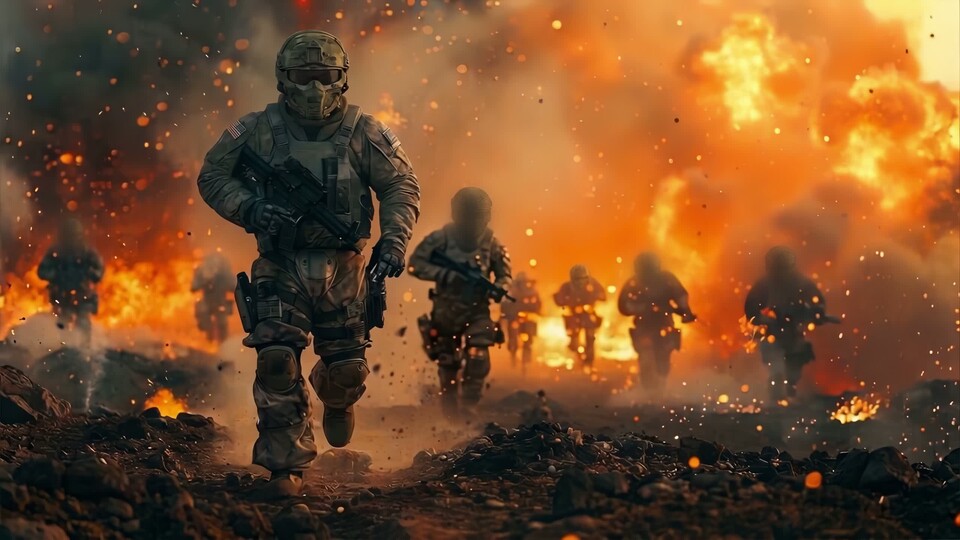
Tactical soldiers advancing through a fire zone is pure genre language: danger, teamwork, spectacle. It could open a military shooter trailer, a tabletop campaign or an esports hype reel. The footage provides the tone; the edit provides the promise.
Trailer grammar
A good trailer has a rhythm: hook, world, conflict, escalation, title. The first five seconds establish the fantasy. The middle shows what the player will do. The end gives a release and a call to action. Music and sound design carry as much of the story as the images.
Gameplay is the proof. Cinematic footage can set the mood, but players want to see the interface, the movement and the consequences of their choices. Balance spectacle with a clear look at the actual experience.
Esports and streaming
Broadcast packages need consistency more than novelty. Lower thirds, transitions, player cards, replay wipes and background loops should form a system that can be produced quickly during a live event. The visual identity has to survive compression, overlays and a dozen different screen sizes.
Hype reels can be more expressive. Fast cuts, neon colour and crowd energy work well. But the viewer still needs to know who is playing, what is at stake and when to watch.
- An announcement teaser that establishes the world.
- A gameplay overview that explains the loop.
- A launch trailer with a clear release date and platform list.
- An esports hype reel with player and event branding.
- A stream overlay kit that stays legible at small sizes.
Genre is a shortcut
Sci-fi, fantasy, racing, horror and military each have a visual vocabulary. Using it helps the audience place the game quickly. The risk is cliché. A retro sports car in a neon landscape is familiar, but it can still feel fresh if the edit has a point of view.
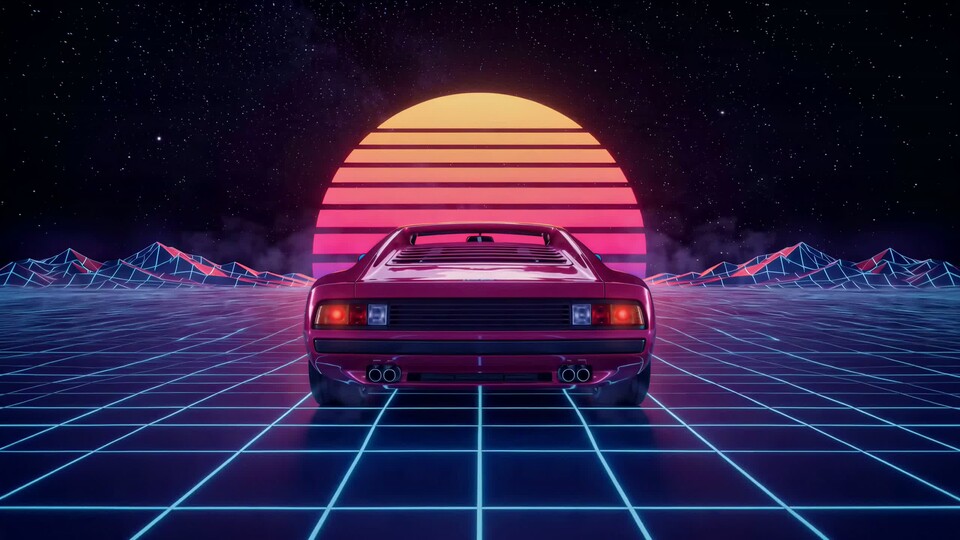
For indie teams, stock footage and animation can fill the gaps between gameplay captures. Use it for atmosphere and transitions, not for fake gameplay. Players notice the difference, and trust is hard to rebuild.
Build for the store page and the feed
The same game needs a vertical teaser, a landscape trailer, a GIF, a set of key art frames and a looping background for the store page. Plan the crops and the captions early. A trailer that only works with sound and a 16:9 screen is only half finished.

Finally, respect the audience's time. A tight thirty seconds with a clear promise beats a three-minute film that repeats itself. The world can be deep; the invitation should be simple.